

What happens when the fiction you once wrote about the present suddenly reads like a snapshot of history?
It’s a question I’ve seen raised more than once in book discussions: When does a novel cross the line from contemporary fiction into historical fiction?
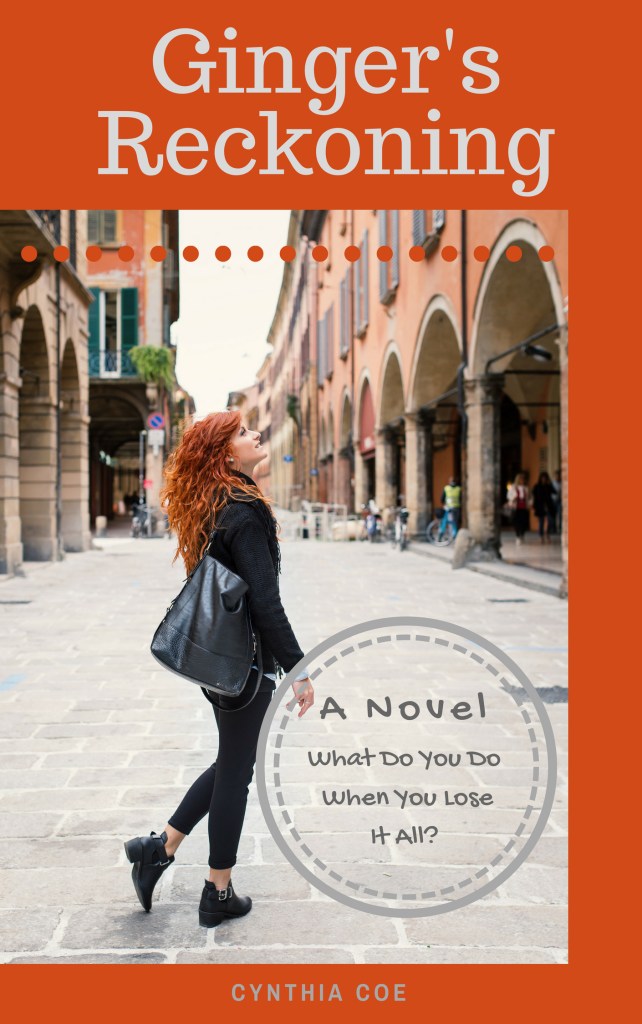
When I first wrote my novel Ginger’s Reckoning in the mid-1990s, I thought of it as purely contemporary. It reflected the culture I was living in: the heady optimism of the 1980s, the rise of the “yuppie” lifestyle, and the dizzying shift in world politics after the Berlin Wall came down. I was writing about the present moment, not history.
And yet, here we are. More than thirty years later, those times have slipped into the past. Readers today open the book and find themselves transported to a world that is no longer familiar—the booming Houston economy of the late ’80s, the uncertainty of the early ’90s, and the strange, fragile exhilaration of traveling through newly opened Eastern Europe. The fashions, the technology, even the ambitions of the characters now carry the sheen of another era.
This, I think, is where fiction becomes historical fiction. Not because the author set out to write about history, but because history inevitably catches up with every story. A novel written as “contemporary” eventually becomes a window into the way things were—the slang, the music, the anxieties, the cultural markers of a specific moment in time.
That’s what excites me about bringing Ginger’s Reckoning back into the spotlight. It began as a portrait of one woman’s rise and fall during the yuppie era, but now it also serves as a time capsule of a world in transition. Sometimes, the past sneaks up on us—and the stories we thought were contemporary become part of history’s tapestry.
Ginger’s Reckoning follows a young woman whose carefully built yuppie life begins to unravel just as the world itself is changing. From Houston boardrooms to bohemian Knoxville hangouts, from the financial secrecy of Zurich to the fragile hope of a reunited Berlin, Ginger is forced to choose between chasing the American Dream and seeking a simpler, more authentic life.
If you’re curious to step back into the world of 1990—when the Berlin Wall was fresh graffiti, Houston pulsed with ambition, and Europe was redefining itself—Ginger’s Reckoning is waiting for you. It’s a story that feels both like history and like today.

Cynthia Coe is the author of Ginger’s Reckoning, her debut novel set in the yuppie era and the aftermath of the Berlin Wall. She is also the writer of The Prayer Shawl Chronicles series and Knitting Through Time, weaving stories of resilience, faith, and women’s lives across history.
Read Ginger’s Reckoning or explore all of Cynthia’s books on her Amazon Author Page.
 Cynthia Coe, Author of Fiction & Spiritual Resources
Leave a comment